
Winter Chain & Traction Laws in Colorado – 2025 Update
As winter will soon set in and the high-mountain corridors of Colorado get slick with snow and ice, it’s more important than ever to be properly equipped. CDOT and the Colorado State Patrol (CSP) enforce two major types of restrictions: Chain or Must-Carry Laws for commercial or heavy vehicles and Traction Laws for general passenger vehicles. This post focuses on the large-vehicle side of the equation, plus what mountain-travelers need to know.
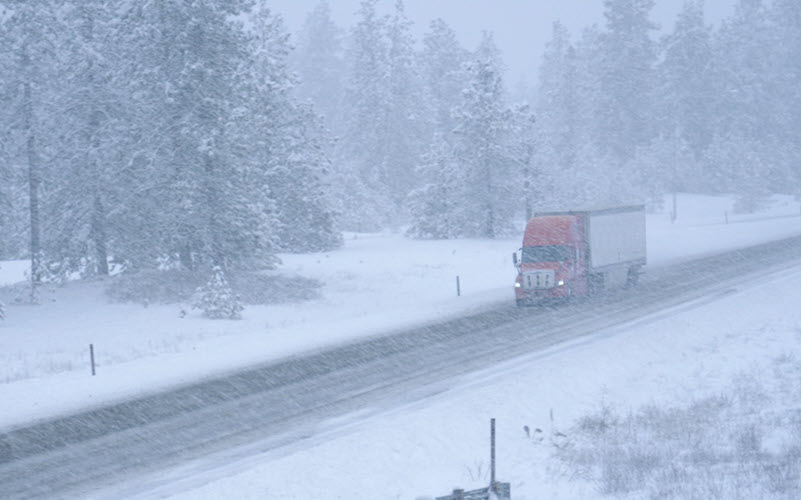
Commercial & Large Vehicle Rules (Heavy-duty / Semi-truck / CMV)
From Colorado State Patrol
Effective for vehicles with a gross vehicle weight rating (GVWR) or gross combined weight rating (GCWR) of 16,000 pounds or more, or vehicles designed to carry 16+ passengers (including driver).
Key elements:
From September 1 through May 31, large commercial vehicles must carry tire chains (or approved alternative traction devices, ATDs) when traveling on certain mountainous corridors — regardless of whether there is visible snow or not.
The applicable corridors include:
Interstate 70 (I-70) west of Morrison (milepost 259) to the Utah border.
Colorado Highway 9 milepost 63 to 97.
U.S. Route 40 from milepost 256 (Empire) to the Utah border.
U.S. Route 50 from milepost 225 (Salida) to the Utah border.
U.S. Route 160 from milepost 304 (Walsenburg) to the New Mexico border.
U.S. Route 285 from milepost 250 (Morrison) to New Mexico border.
All of U.S. Route 550.
Equipment requirements for drive axles (for commercial vehicles):
Straight trucks or single-drive axle combinations: at least 4 tire chains, 4 AutoSocks, or approved ATDs.
Tandem-drive or dual-axle combinations: similar requirement, may use certain tire cables under specified conditions (e.g., if chains on two outside tires, cables may cover two on another axle) but must abide by the specified diameters.
Buses or smaller commercial trucks under the large-vehicle definition: minimum of 2 tire chains (or equivalent) for two-drive-tire configurations.
Penalties / fines for commercial vehicle non-compliance:
Failure to carry required chains or devices: up to $500 fine + ~$79 surcharge.
If the vehicle ends up stuck and blocking the roadway due to inadequate equipment, fines may reach $1,000 + surcharge (~$157).
Passenger & General Vehicle Rules (Relevant for mountain travel) below.
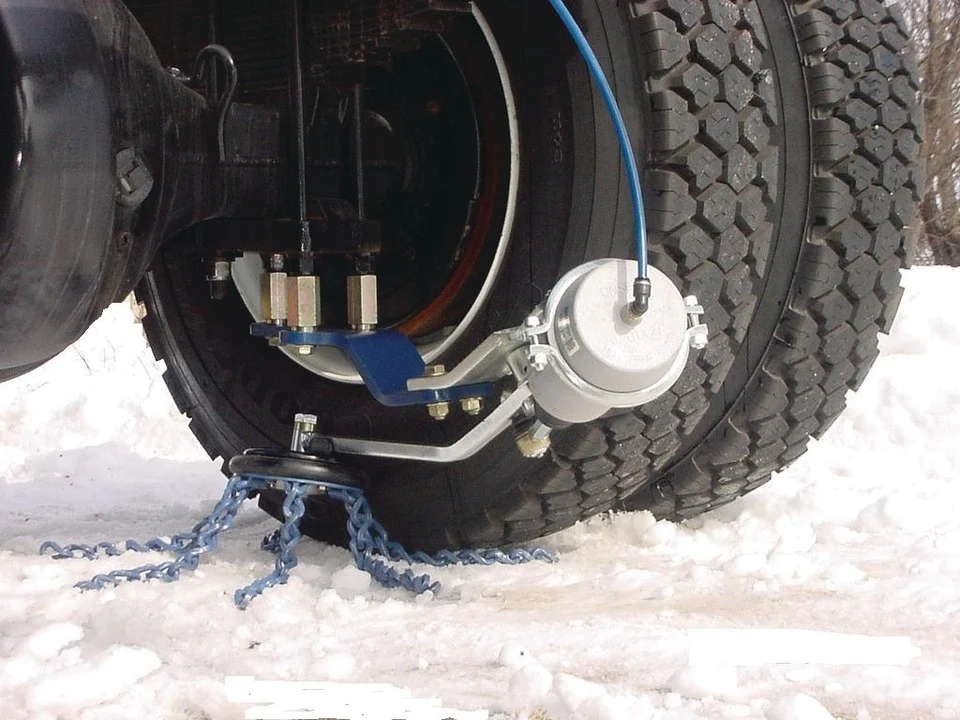
Onspot Automatic Tire Chains
Diesel Performance is an Onspot Automatic Tire Chains Certified Dealer and Installer.
Call us at 970-245-6060, or send us an email.
Arrive safe and on time with Onspot – Learn More
Passenger & General Vehicle Rules (Relevant for mountain travel)
While this post is focused primarily on large vehicles, motorists in passenger cars also have clear obligations when traveling in Colorado’s mountains.
From Colorado Department of Transportation
On designated segments (especially I-70 between Dotsero and Morrison etc.), from Sept 1 to May 31: two-wheel drive vehicles must have:
- Tire chains or approved ATDs on two or more drive tires; OR
Tires with tread depth of at least 3/16 inch rated “All weather” or “Mud & Snow” (M+S) or with mountain-snowflake icon. - For AWD/4WD vehicles: tires must likewise meet the minimum tread and rating requirements, or chains/ATDs must be installed when a Traction or Chain Law is declared.
Penalties for passenger vehicles:
- For inadequate equipment during a Traction or Chain law, fines start at $50.00, plus a $17.00 surcharge for some violations.
- Motorists could face more than $130.00 in fines when a Traction or Chain Law is declared.
Mountain Travel & Practical Tips
Travelling the high-elevation and steep-grade corridors in Colorado means extra vigilance.
- Drivers of large vehicles: know that the “Must Carry” law means chains or ATDs onboard at all times for the specified corridors and months. Inclement weather isn’t the only trigger—these rules may apply even when weather appears benign.
- Small vehicle drivers: don’t assume AWD alone is enough—check tire ratings and tread depth, carry chains or ATDs if travelling mountain routes, especially I-70, US 285, US 550.
- Always check real-time road conditions at the official site (e.g., COtrip.org) before taking major corridors.
- At chain‐stations along mountain passes, be prepared for cold, dark, and possibly limited space while chaining up.
- For heavy fleets: include time for chain-up, removal, reduced speeds, rest requirements — these affect schedules.
-By staying informed and properly equipped, all drivers — whether commercial trucks, semi-trucks or passenger vehicles — can help keep Colorado’s mountain highways moving safely this winter. Stay safe out there and be prepared.